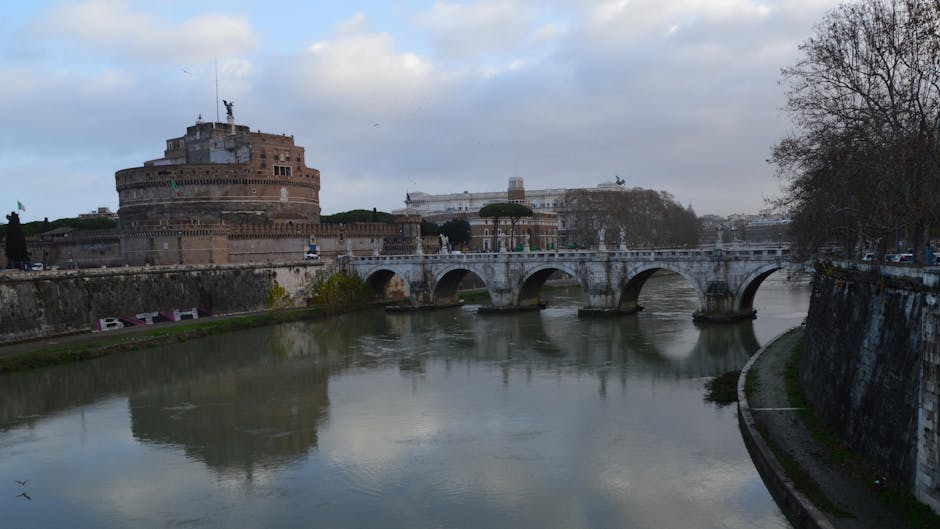
Few buildings in Rome have changed roles as dramatically as Castel Sant’Angelo. Emperor Hadrian built it between AD 135-139 as his mausoleum, a monumental tomb accessed via the Ponte Elio (now Ponte Sant’Angelo). Its cuboid base and circular drum were once clad in marble and topped with a bronze quadriga. The mausoleum housed the ashes of Hadrian and later emperors such as Antoninus Pius and Marcus Aurelius.
In AD 403 it became part of Rome’s defensive walls and earned the name Castellum. During a plague in 590, Pope Gregory I reportedly saw the archangel Michael sheathing his sword atop the fortress, signalling the end of the epidemic; hence the name Castel Sant’Angelo. Popes later used it as a refuge connected to the Vatican via the Passetto di Borgo corridor, and it served as a vault, archive and prison. Fortifications were strengthened in the 16th century; in 1925 it opened as a museum.